Senin, 26 Maret 2018

6 Ways to Create a Peaceful Home

image of a calm home with a cat by a window

Here in New England this year's winter has for the most part been milder than in the past, with only a couple of notable snowstorms to speak of. Despite the minimal amounts of snow, my children have missed at least five days of school for the potential threat of storms that truthfully didn’t amount to much.

When an unexpected day off from school graces my family, it’s certainly exciting for my kids, but at the same time it can wreak havoc on my schedule because I work full-time outside the home. Now I have to juggle last-minute child care, figure out a different arrangement for meals, and for those of my older kids who can handle being home alone for a few hours I want to make sure they aren’t at each other’s throats without adult supervision.

I recently received an e-mail from a single dad in the Chicago area asking for tips on how to create a more peaceful home environment. He works 50+ hours a week and is frustrated that he can’t be more available to his three young children. With a busy career and being the sole provider for his family he asked how he could lay a more calm and peaceful foundation so that it carries over on a regular basis when he can’t be home with the kids.

Thank you Dave for the great question. Parents want peace of mind when they can’t be at home with their kids, no matter what the reason. The many days my kids have had out of school this year makes me feel the same way—I want a serene, soothing atmosphere for my family to enjoy whether I’m at home or not.

Here are six ways you can create consistent harmony in your home so that love and peace are the norm and chaos and friction won’t be welcome.

6 Ways to Create a Peaceful Home

  1. It Starts With You
  2. Speak Calmly
  3. Create Personal Space
  4. Be Mindful of Family Time 
  5. Set the Tone with Music
  6. Stay Organized and Clutter Free

We will check these out in more detail.

1. It Starts with You  

Parents have the ability to create the tone that the rest of the family will follow. With 25 years of parenting under my belt, I’ve found this to be one of the biggest factors in setting a peaceful, gentle atmosphere. If I get up cranky, the rest of the house follows suit. When I get up chipper and cheerful, and seem excited about the day ahead, my kids relax and most often will feel good about the geometry test they’re about to face later in the morning or playing against the undefeated basketball team after school that day. Moods (good or bad) can definitely be contagious and have a ripple effect for the rest of the family.

Research shows that a parent’s daily behaviors can shape how their children will cope and act for the rest of their lives. In Developmental Psychology at Vanderbilt’s article How Do You Affect Your Child?, their studies show that “Psychologists refer to this as the influence of parent socialization, the way children learn the behaviors and skills necessary to interact in their everyday lives.”

If you’ve noticed your home tends to evoke a more stressful vibe, stop and evaluate what you might be doing to contribute. Are you consistently short and snippy with how you communicate with your kids? Are you joyful when you see them first thing in the morning/after school or do you come across as burdened by caring for them? Make eye contact and smile when your kids enter the room. Hug them when they leave for school. Remind them you are looking forward to picking them up at practice later and will settle in at home for a bite to eat together. A peaceful existence starts with you.

2. Speak Calmly

Three of my children had significant speech delays. For the early years when they worked so diligently with speech language pathologists, one thing they were repeatedly instructed to do was to “use your words.” Once they did begin using more of a vocabulary they were instructed to use their “nice words.” This made a huge impression on me not only as the mother of speech-delayed kids, but it was a wonderful reminder that we should all speak nicely and calmly on a regular basis, regardless of what we’re talking about.

One of the foundations of a peaceful home is speaking to one another with positive words as well as using a kind tone. In5 Ways to Speak Positively to Children I elaborate on the importance of a family-friendly tone. “People, kids especially, tend to respond to a request when they hear a pleasant voice rather than someone shouting or overreacting with an emotional tirade. Think about it—when your coworker, your spouse, or even a stranger in the supermarket wants to get your attention, would you rather they use a harsh tone to speak with you or calmly let you know they need something from you?”


3. Create Personal Space

When my kids were much younger—pre-school and early elementary aged—I established quiet time on a daily basis. This time was as much for them as it was for me. We all retreated to our bedrooms or a quiet nook in the house to sit with a book, or take a quick power nap. We  basically decompressed for a little while so we could stay energized and be less cranky for the afternoon ahead. As they got older and into their teen years, instead of quiet time we’ve found ways to each create our own personal space in our home. With eight kids that wasn’t easy, but we managed to all have a spot to call our own and, best of all, have since been respectful of one another’s space. When anyone is feeling stressed or needs to take a breather, we are able to seek out these individual calm zones and just chill until we feel like being part of the group again. This ritual of retreating to our individual quiet zones has helped pave the way for a more serene atmosphere all these years later.

4. Be Mindful of Family Time

Today’s families are more crazed than ever. Our calendars are chock-full of commitments including appointments, sports practices, work meetings, club activities, playdates, veterinarian and pet care, check-ups, birthday parties—you know the drill. It’s so easy to focus on the chaos in our lives rather than the simple pleasures.

A cluttered environment is living in CHAOS: Can’t Have Anyone Over Syndrome.

A peaceful home is one where family members consistently connect with one another on a regular basis. By keeping family time sacred such as dinners together, monthly dates to the movies and outings for pizza, staycations at the beach, playing board games instead of zoning out on smart phones, we can keep the peace easier when the going gets tough. See 10 Healthy Habits That Strengthen Your Family for more ways to bond as a family.

5. Set the Tone with Music

I’ve always been a person whose mood can change in a heartbeat if I’m listening to music. Ever since my kids were little and we watched sing-a-long videos, music has always been an important element in our home. In the morning I play catchy tunes that energize all of us for the day ahead. In the early evening hours I play soothing jazz music or something contemporary simply for a calming background effect. Forget the holidays—I have Christmas and holiday tunes playing 24/7 to offset any holiday madness that creeps into our home. Music can be a powerful tool in creating a harmonious energy in your home and is something that your own kids may use as a calming effect in their own home someday as well.

6. Stay Organized and Clutter Free

An organized, clutter-free home makes for a happy, peaceful home, especially when you as the parent cannot be present to keep the home fires burning. One of my favorite clutter-clearing experts, FlyLady, refers to a cluttered environment as living in CHAOS: Can’t Have Anyone Over Syndrome! Isn’t that the truth?

It doesn’t matter how unorganized and bombarded with clutter you may feel your home is right now, that can all change if you make the commitment to get started today. The benefits will not only help in defining a more peaceful atmosphere for your family to live in, but you’ll be teaching your kids an important lesson in how to better care for their personal belongings. When you can walk into a room and immediately locate the paperwork you need, or a specific outfit your child wants to wear and never have to scurry and scramble to find something that you need right away, you are automatically creating an easy-breezy home for your family and for your friends and guests to enjoy as well. Check out all the great ideas on how to get organized on QDT’s Organization page.

How do you keep a peaceful vibe in your home? Share your thoughts in the comments section at quickanddirtytips.com/mighty-mommy, post your ideas on the Mighty Mommy Facebook page. or email me at mommy@quickanddirtytips.com. Visit my family-friendly boards at Pinterest.com/MightyMommyQDT

Image of calm home © Shutterstock


Jumat, 23 Maret 2018

The Flip Side of Social Awkwardness (It's OK to Cringe!)

image of two people being socially awkward

Awkward moments are a fact of life. We’ve all done the back-and-forth dance of trying to get around someone on the sidewalk. We’ve all simply not seen the line and accidentally cut, causing grumblings among others and embarrassment to us. But for some of us, awkward moments seem like an everyday occurance. What to do? And is it really so bad? Luckily, we can ask Dr. Ty Tashiro.

Dr. Ty Tashiro is a psychologist and author of Awkward: The Science of Why We’re Socially Awkward and Why That’s Awesome. He is also the author of The Science of Happily Ever After: What Really Matters in the Quest for Enduring Love. His work has been featured in the New York Times, the Washington Post, Time.com, TheAtlantic.com, and on NPR, plus he’s addressed TED@NYC, the Harvard Business School, MIT’s Media Lab, and the American Psychological Association. You can find him on Twitter @tytashiro

In conversation with Savvy Psychologist Ellen Hendriksen, Dr. Tashiro shines a light on the awkward brain, both in childhood and as adults. In this episode you will learn:

  • What awkwardness actually is and why there are two sides to being awkward
  • How the hallmarks of awkwardness can actually be strengths
  • How the gap between what’s socially expected and our behavior gives rise to awkward or embarrassing moments
  • Why to put our awkwardness into context and step away from all-or-nothing thinking
  • How awkward people can use their talent for systems and how things work to hack social interactions
  • Two great ways to help your awkward child, plus how not to overprotect them (with potentially hilarious results)
  • How the painfully awkward traits of childhood often evolve into wonderful traits of adulthood

Listen to the full interview with Ty and Ellen using this article's audio player or wherever you like to get your podcasts.

how to be yourself ellen hendriksen bookCheck out Ellen's book HOW TO BE YOURSELF: Quiet Your Inner Critic and Rise Above Social Anxiety. Get even more savvy tips to be happier and healthier by subscribing to the podcast on iTunes or Stitcher, or get each episode delivered straight to your inbox by signing up for the newsletter. Follow on Facebook and Twitter.

For free, helpful downloads to fight social anxiety and be your authentic self, visit EllenHendriksen.com.

Image of awkward people © Shutterstock

Want more Savvy Psychologist? Subscribe below.


Kamis, 22 Maret 2018

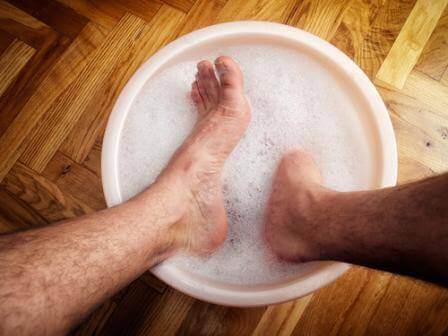
Natural Remedies to Prevent and Cure Athlete’s Foot

Natural Remedies to Prevent and Cure Athlete’s Foot

Basic Athlete’s Foot Treatment

To treat athlete’s foot, prepare a solution of water and white vinegar—one part white vinegar to four parts water; soak your feet for 20 to 30 minutes twice a day. (Yes, vinegar can do everything.) Then sprinkle some baking soda between your toes and rinse your feet after fifteen minutes. It is as effective as an expensive antifungal powder.

Essential Oil Variation

If you’re got some essential oils around the house, give this variation on the previous treatment a try. To a gallon of warm water, add ½ cup vinegar along with a few drops of tea-tree oil and lavender oil, both of which have antifungal properties. Soak your feet for 20 minutes twice a day in this solution, and you’ll quickly have a noticeable improvement in your symptoms. 

The Salt Solution

For an easy, cheap remedy, try a salt soak (after all, who doesn’t have salt?). The fungus that causes athlete’s foot can’t thrive in saline (a.k.a. salty) solutions, so dissolve about a 1/3 cup salt in a gallon of warm water, and soak your feet in the water for 10 minutes or so at a time, then dry your feet thoroughly. Repeat daily until the problem disappears. Salt has the added benefit of eliminating the perspiration on which athlete’s foot thrives.

Beer for Athlete’s Foot

Fighting athlete’s foot? Soak your feet in the darkest beer you can find. The yeast in the beer attracts the fungus from your feet. (Unfortunately, it’s important that you don’t drink any beer during this treatment! It will raise the yeast content in your body, making the athlete’s foot more likely to stick around.)

Mouthwash Remedy

For immediate relief from itching or burning, don’t buy pricey anti-itch medication: just soak your feet in an antiseptic mouthwash like Listerine. It really works, and it costs a lot less.

Nighttime Yogurt Treatment

To get rid of athlete’s foot, rub your feet in plain yogurt each night, allow it to dry, and then rinse off. The acidophilus (good) bacteria in yogurt go to work immediately on killing the fungus!

Start with Your Shoes

If you’re prone to athlete’s foot, stop it before it starts with a household spray like Lysol. Every evening when you remove your shoes, spray some Lysol on a paper towel or rag and then wipe down the insides of your shoes. You’ll not only eliminate an area where the fungus could have grown, but you’ll reduce the chance of spreading it to others if it is there.

Stay Dry

The key to making sure you never get athlete’s foot is to keep your feet dryd. When you get out of the shower, dry your feet with a hair dryer to make sure you eliminate all traces of moisture. Next, dust them with some cornstarch to absorb moisture during the day. You’ll make an inhospitable environment for the fungus, and your feet will stay nice and dry.

Keep Athlete’s Foot from Spreading

Keep your athlete’s foot to yourself! If someone in your family has it and you share shoes, socks, a towel, or a shower with him or her, you can catch it too. To prevent it from spreading through your household, don’t share these items with others.

Foot Bath to Prevent Athlete’s Foot

If you find you’re susceptible to athlete’s foot, here’s a trick to keep that nasty fungus at bay. Once or twice a week, soak your feet in a hot bath mixed in with two cloves of crushed garlic. The garlic will kill athlete’s foot before it starts, and you won’t be afraid to walk around in sandals. To treat a case of athlete’s food that has already begun, try soaking your toes in mouthwash. It may sting a little, but the fungus will be gone in just a few days.

Tea Time

Another great idea for keeping sweaty feet dry is to soak them in some tea. Add five or six teabags to your footbath and pour in about a half-gallon of boiling water. Allow the mixture to steep and cool until it’s comfortable to put your feet in. Soak for 30 minutes, then dry your feet thoroughly. Tea contains tannins, a kind of astringent that will eliminate excess moisture, leaving your ailing feet much more comfortable.

Image by Shutterstock.

For more all-natural remedies from all around the internet, check out our Health and Beauty Tips board on Pinterest. And don’t forget to sign up for our newsletter and follow us on Facebook and Instagram!   


Parts of Speech

Articles

Articles are short words that come before nouns. There are two types of articles: indirect articles and direct articles.

The indirect articles are “a” and “an.” “A" comes before words that start with a consonant sound, and “an” comes before words that start with a vowel sound.

  • Will I get a bike for my birthday?
  • Amit wears an orange jersey.

The direct article is “the.”

  • The dog walked down the street.

Some other grammar classification systems group articles with adjectives or call them determiners.

Some nouns need an article before them, and some don’t.

Nouns

Nouns are names of people, places, things, and concepts.

Proper nouns are the given names of people, places, and things. The first letter of a proper noun is capitalized.

  • We visited California last year.
  • Who told Adam that Sarah called?

Common nouns are the generic names of people, places, things, and concepts. Common nouns are written in lowercase.

  • We visited a new city.
  • Who told Adam that a girl called?
  • Sarah showed courage today.

Nouns can also be categories as concrete, abstract, collective, and compound.

Verbs

Verbs can describe actions, help other verbs, and link a subject to descriptors.

Action verbs describe actions:

  • Matteo jumped over the fence.
  • Harry wins every match.

Helping verbs (aka auxiliary verbs) add meaning to the main verb. They can convey a sense of time, possibility, ability, and so on:

  • Maria might take you to the store.
  • Maria can take you to the store.
  • Maria has taken you to the store.

Linking verbs connect a subject to a descriptor.

  • Squiggly is yellow.
  • Aardvark was the best fishing buddy today.

This piece about “bad” and “badly” explains more about linking verbs.

Adjectives

Adjectives modify nouns.

  • Pick the yellow flower.
  • Luka carried the heavy bags.

Some systems call words such as “a" and “the” and “my” and “his” adjectives.

Nouns can also function as adjectives, and when they do, they are called attributive nouns:

  • We visited the tree farm.
  • She hid the letter in a hat box.

Adverbs

Adverbs can modify verbs (or verb phrases), adjectives (or adjective phrases), other adverbs (or adverb phrases), and whole sentences.

  • We made pizza yesterday.
  • Deven expertly added toppings.
  • Thankfully, Hugh couldn’t find the anchovies.

Sometimes, words you might think of as prepositions act like adverbs. When a word such as “over” or “up” is modifying a verb, it’s acting like an adverb.

Some people call such words adverbs and other people call them prepositions. It’s the difference between what something is and what something does: It’s a preposition doing a job that is typically associated with adverbs. Rational people can disagree about this. It’s a gray area of grammar.

For longer explanations about the differences between prepositions and adverbs, see our articles How Many Prepositions Can You Use in a Row and Preposition or Adverb?

Pronouns

Pronouns can take the place of nouns in a sentence or refer to someone who was named earlier in a sentence.

  • He went to the football game.
  • Give the ball to me.
  • Tara and Manuel baked the cake themselves.

Pronouns such as “my,” “your,” and “their” are commonly called possessive pronouns. Others may call them possessive adjectives or possessive determiners, and those terms are also correct.

  • Don’t tell his sister.
  • Our house is always noisy.

Conjunctions

Conjunctions join things and can create transitions. 

Coordinating conjunctions connect things that are grammatically equal, such as two nouns or two clauses:

  • Liam likes milk and cookies.
  • I like milk, but I don’t like cookies.

Subordinating conjunctions head dependent clauses.

  • We were late because traffic was bad.
  • Call me when you get home.
  • Since you paid, you should stay.

Correlative conjunctions are pairs such as “neither ... nor.”

Prepositions

Prepositions tell you about relationships. They can tell you about time, location, position, duration, direction, and more.

  • On Friday, we’ll choose a winner.
  • Drive toward the beach.
  • The clock is over the mantle.
  • He sent the card to Sylvia.

Sometimes prepositions modify verbs in a way that is typically associated with adverbs. (See the adverbs section above.)

  • Clean up the kitchen.
  • He ran over the cat.
  • The tree fell down.

How to Tell Prepositions from Subordinating Conjunctions

Some words, such as “after” and “before,” can be prepositions or subordinating conjunctions depending on how they are used. Here’s how to tell them apart:

If the word is followed by a noun or gerund, it is a preposition. (The noun or gerund is called the object.)

  • After the luncheon, Squiggly needed a nap. (preposition)
  • Before casting the show, Aardvark watched videos. (preposition)

If the word is followed by a main clause (something that could stand as a sentence on its own), it is a subordinating conjunction.

  • After Squiggly ate five kumquats, he felt sick. (subordinating conjunction)
  • Aardvark wept before he posted the list. (subordinating conjunction)

Gerunds

Gerunds are made by adding the “-ing” suffix to verbs. For example, “running” is the gerund of the verb “run.”

Gerunds can act like nouns. Often (but not always) you can replace a “nouny” gerund with a regular noun, such as “cookies.”

  • Running makes me happy.
  • Everyone hates my singing.

Sometimes, gerunds act like verbs. For example, in this sentence, the gerund is modified by an adverb:

  • Lea’s quickly defusing the bomb saved the day.

Participles

Participles typically end in “-ing” or “-ed” and can be in the present tense (“lifting”) or past tense (“lifted”). Some participles take irregular endings (“taken,” “slept,” “done,” “been”).

Participles have multiple uses, making them one of the more difficult parts of speech to master.

Participles can act like adjectives:

  • Stop the speeding car.
  • Left out overnight, the milk spoiled.

Participles can join with certain helping verbs and forms of the verb “to be” to make perfect and progressive verb phrases:

  • Amelia had been walking.
  • Ruby is walking.
  • Oliver will have been walking.

How to Tell Gerunds, Participles, and Adjectives Apart

Nothing is trickier than distinguishing a participle from a gerund. They look identical. “Forgiving,” for example, can be a participle or a gerund (or even an adjective) depending on how it’s used. Use these simple rules to tell the difference.

First, can you modify the word with “very”? If yes, it’s an adjective.

  • Squiggly was in a very forgiving mood. (adjective)

Second, if you can’t modify the word with “very,” can you modify it with an adverb? If yes, it’s a participle. If no, it’s a gerund.

  • Squiggly is graciously forgiving his brother. (participle)
  • Squiggly recited the forgiving spell. (gerund, imagine a spell for forgiving)

You may also have trouble determining whether an “ing”-word in a phrase at the beginning of a sentence is a participle or a gerund. When the word follows a preposition, it's a gerund. 

  • Singing in the rain, Squiggly felt elated. (participle)
  • After singing in the rain, Squiggly felt damp. (gerund)

For the rationale behind these simple tests, see our longer article on participles and gerunds.

Infinitives

Infinitives are the "to" form of verbs.

  • I want to go.
  • I pledge to uphold the law.

Infinitives can play different roles in a sentence. These are just two examples:

  • Subject: To win was his biggest desire.
  • Object: He hoped to win.

Some grammarians also consider the plain form of a verb to be an infinitive in sentences such as “Make him shut up,” and “Let me go.” 

Split infinitives (“to boldly go") aren’t wrong.

Grammar Pop

If you'd like to practice identifying parts of speech, you can try our iOS game, Grammar Pop:

A Grammar Pop screenshot

Optimized for iPad: http://bit.ly/GrammarPopiPad 

For iPad and iPhone: http://bit.ly/GrammarPop 


The Glory Days of Wild West Outlaws

Portrait of Jesse James

Dodge City was the glory days of not only Wyatt Earp, Bat Masterson, and the other lawmen that patrolled the dusty streets of Dodge City in the 1870s, but also the outlaws who passed through the town. In my book Dodge City, I wanted to tell the stories of these outlaws too because they were very much part of the fabric of the frontier.

Two of the outlaws that came through Dodge City were Frank and Jesse James—they didn’t come to Dodge City to do any mischief, they were mainly passing through, and Frank and Bat Masterson hit it off, becoming friends. In fact, Frank and Bat would go on to become correspondents, writing letters back and forth until Frank’s death decades later.

As for Jesse James, most of his story is well known—he passed his time robbing banks and trains, but what may not be too well known is Jesse James was one of the early explorers of the public relations world. He came up with the idea for a train robbing that his gang committed in 1874. When Jesse and company had finished getting what was in the safe and taking what the passengers had—jewelry, money, and so on—Jesse handed the conductor a piece of paper and asked him to give the paper over to the next newspaper town they came to and have it printed.

Jesse James had written a press release in advance that described the robbery that he and his gang had just committed on that train. Sure enough, the next town that the train came to that had a newspaper, the conductor produced the press release and it was published. People around the country were reading about Jesse James’s adventures as written by Jesse James.

John Wesley Hardin was another outlaw known for having all kinds of notches in his gun. He was a rather indiscriminate killer—anybody got in his way, he killed them. Hardin started killing in this manner when he was still a teenager. He’s associated with the expression “I never killed anybody who didn’t need killing.” To say the least, he must have met a lot of people who needed killing because his guns were busy.

John Wesley Hardin was another outlaw known for having all kinds of notches in his gun.

When he was finally tracked down and arrested, he was sent to jail. Hardin was arrested in Florida after fleeing Kansas, Texas, and a few other places that were looking for him. He was able to hide out successfully for a few years, but was eventually tracked down and caught by the Texas Rangers. Hardin spent many years in prison and when he was finally released he went back to Texas and he became, of all things, a lawyer. Yes, he studied and passed the Texas Bar examination to become a lawyer.

John Wesley Hardin was intending on going straight and was even married for a time. His marriage didn’t last too long, however, probably because at the time he was in his mid-to-late forties and his bride was a fifteen-year-old girl. There were obviously some differences there and she eventually left him.

Hardin went about his business and was visiting another town for a trial, likely giving some evidence. After the trial, he was in a saloon telling a story to another patron when a man walked up behind him, put a gun to his head, and pulled the trigger—that was the end of John Wesley Hardin. Strangely enough, the guy who killed him was a man named Slaughter.

Finally, Clay Allison was one of my favorite outlaws from the book Dodge City. Clay Allison had a terrible reputation—great reputation if you’re an outlaw, but a terrible reputation as a human—for killing people he was known as a shootist, which is what they called people who were gunslingers then. One day Allison came to Dodge City with the express purpose of killing Wyatt Earp.

Now why? One story goes that Wyatt had shot a friend of Clay Allison’s, a man by the name of George Hoy. Wyatt shot George, but it wasn’t the shot that killed him—he eventually died of gangrene. Other accounts say that there was a bounty on Wyatt Earp’s head and that Clay Allison came to town to collect that bounty. In any case, Allison showed up with three or four Texas cowboys. He was going to make sure that his plot went well and instructed the cowboys to wait in a certain doorway nearby. If Clay Allison made his move and killed Wyatt Earp then they could just go on their way, but if it seemed like it was going to be more of a shooting standoff or, worst came to worst, Wyatt Earp killed him, those cowboys were to burst through the doorway and shoot Wyatt Earp down.

Wyatt had no idea about this plan, though he was tipped off when Clay Allison rode into town. When Clay Allison was in town, the chances were he wasn’t there to do anything nice. But Wyatt Earp was never someone to avoid a confrontation, he believed in taking care of these things head on. Not necessarily shooting it out, but he wasn’t going to go skulking around, waiting for somebody to find him. So he went down the Dodge City streets and confronted Clay Allison.

Bat Masterson had also heard Clay Allison was in town and assumed right away that this was not for any charitable purpose, so he got his shotgun out and went down another street in order to come up behind the confrontation. Sure enough, as Masterson snuck around the street he saw the Texas cowboys lurking in the doorway.

Clay Allison and Wyatt Earp were meeting in the middle of the street and Allison was surprised. He was used to staring at a lawman and that stare alone the lawman would cause the lawman to say “you know what, I’m out of here.” But Wyatt Earp was a different breed.

Earp was taller than Clay Allison and Allison was not used to looking up to anybody. Wyatt had these steely blue eyes that could get very cold when he was staring at somebody, especially an outlaw, and Allison could see that there was not an ounce of fear in Wyatt. He started to wonder that he might not have a lifespan that would be very much longer than that particular day in Dodge City in 1878.

So Clay Allison decided he would leave. He said to Wyatt that he was going to leave town, mosey away and bid Earp a good day. Wyatt Earp replied that it sounded like a good idea, maybe they’d meet again, not trying to provoke anything. And that would have been it, except Clay Allison calls out to the Texas cowboys “Okay, fellas, we’re leaving,” and another voice shouted out “You bet you are!” Who was it? Of course, it was Bat Masterson, who was in the doorway with his shotgun trained right at the cowboys.

Dodge City: Wyatt Earp, Bat Masterson, and the Wickedest Town in the American West is now available in paperback! Pick up your copy from Amazon, Barnes & Noble, IndieBound, Books-a-Million, or iBooks—or if you prefer to listen, check out the audiobook on Audible.


5 Common Myths About Doctors, Part 1

IMAGE OF Doctor holding up sign that reads 'doctor myths'

As a social media engaged physician, I too often find myself cringing when chancing upon doctor-bashing articles and comments. To be honest, I no longer read them. It’s frustrating and, yes, sometimes infuriating to read misinformation that has somehow spun out of control.

Part of the reason for the exasperation is due to the insurmountable and overwhelming volume of information on the internet—it’s simply not feasible to fight each article and respond to each cruel comment. And what would that accomplish anyway? It’s easy for people to “hide” behind the internet—it’s not as realistic to actually say out loud some of what I've read people stating while sitting behind the safety of their computers.

But doctors are humans, too. And most of us have a great sense of ethics and dedication to our profession and patients. This is partly what drives us to this profession. We have all taken an oath to “do no harm,” and we live by that.

So rather than idly reading the misinformation and myth, I will strive to provide my perspective on some of this misrepresentation and shed light on the truth as best I can in this two-part article. For part one, here are some of the most discouraging, false stereotypes created about physicians.

Doctors Are Wealthy

Why did I decide to pursue medicine as a career? Well, first of all, like most other doctors, I fancied science and math growing up—I excelled at these subjects and was a geek of sorts (at least more than I’d let on). I also knew whatever path I’d choose would be a humanitarian one. I felt a sense of satisfaction serving others, whether while teaching as an organic chemistry teaching assistant for three years in college, volunteering at a teen clinic in our community clinic, or serving as a liaison between the student body and our campus health clinic. It was all personally rewarding. You may argue that perhaps there is also something selfish in the feeling of the satisfaction we receive in return for wanting to help others. That may be partially true. Yet whatever the case, this is the path I chose.

But never in my decision making did I think to myself, “I want to be rich.” This is one of the most frustratingly untrue doctor myths. If money was on my mind when deciding on a future career, then I would have chosen business and would strive for a CEO corporate position. My student loans would be cut to a minute fraction of what they are. Needless to say, I will be paying off my student loans for decades to come.

In fact, as I mentioned in a recent podcast, doctors are clueless when it comes to money. It’s not what drives us, contrary to myth. We opt for a minimum of 11 years of extra schooling past high school, carrying well over half a million dollars in debt by then. In the process, we sacrifice our youth—while our peers are out socializing, pursuing their hobbies, starting a family, and living life, we have our head stuck in a book for over a decade. We are often in our thirties when we finally start earning an income. When I finally started to earn instead of pay, I was working 100 hour work weeks as a resident, with not much more than minimum wage earnings.

Who in their right mind wants to do this, you may ask? Only someone crazy enough to enjoy the near-torture we endure until we finally finish years navigating a hierarchy and ranking structure akin to the military.

Believe me, no amount of money is worth all of this effort…unless this is truly your calling. And believe me when i say that most of us are certainly not “rich.”

Doctors Are In Cahoots With the Pharmaceutical Industry

While it’s true that those of us in healthcare depend heavily on the pharmaceutical industry to produce necessary life-saving medications, it’s really a love/hate relationship. If you recall my prior episode on costly medical tests that are typically unnecessary, I mentioned that healthcare is a business in this country. If we retain this model, we need to be ready to accept that there’s a huge financial incentive that drives this pharma segment of the system as well. The drug manufacturing companies are therefore given the opportunity to charge whatever they fancy for their drugs. We, the people living in the U.S., are all passively allowing it to happen by electing government officials who encourage this unethical dilemma.

With that being said, most doctors in the trenches get exceedingly frustrated, knowing that patients cannot always afford their medications due to high cost. It’s outrageous to see a patient with leukemia whose survival is dependent on a pill that costs $13,000 a month. What doctor doesn’t feel frustrated when their asthmatic patients can’t afford to pay for that inhaler that will keep them from losing their breath? Or how about that outrageous life-saving Epi-Pen pharma fiasco? Like patients, doctors felt the pain of that one, too.


Thankfully, there are now generics for many ailments. And believe me, most of us practicing doctors purposefully select generics for everything unless we've no other choice. Like my colleagues, I cringe every time I am forced to select a brand when a generic doesn’t exist.

Many of us also refuse to dispense any “samples,” another tactic to entrap the patient.  I have to admit, I have lost a patient or two in my career because of it, believe it or not. Patients cannot afford the prescriptions that their insurance plans will not cover and really sometimes depend on samples to get by. But by dispensing them, I’d be encouraging these pharma games and I am not about to compromise my ethics.

As with many of my colleagues, I refuse any contact with the pharmaceutical reps who visit the clinic in hopes of “educating” doctors about their new, outrageously priced, and often unnecessary drugs when generics are easily available at a fraction of the cost. Interestingly, I have never seen an unattractive pharma rep. This is not a coincidence. They are top-notch sales people who can sell anything.

But guess how they bypass the doctor in order to capture the consumer? Through ads on television. Nearly daily in my office, patients inquire about a medication commercial they saw on TV. The pharma’s are quite savvy at manipulation of our healthcare system.

Do they bring “free” lunch for the staff? This depends on the medical group’s stance on the level of pharma involvement at their sites. My staff knows to refrain from mentioning their presence, or to even “sneak” a plate for me. No thank you. These lunches are purposefully designed to place pressure on employers and doctors who have to “sign off” on them, because the staff gets a “free lunch.” In exchange, they occupy our precious clinic time in order to give their biased, rehearsed sales pitches about their assigned drug. Most of them do not have any medical degree or experience other than in sales.

The new Physician Payments Sunshine Act now requires transparency of the monetary value of these lunches. The cost of these lunches gets reported on an individual doctor basis and is publicly made available. So if that one lunch cost $300 and three doctors sign for them, then each one of those doctors gets $100 added to their tally report.

Let’s face it, though—there really is no “free lunch.” And believe me when I tell you that many doctors agree with these sentiments. But I’d like to make clear, that whether we do accept these controversial lunches or not, we are certainly nowhere near being “in cahoots” with the pharmas. While we all depend on the pharmas to produce life-saving drugs, in my personal opinion regulation to some degree is a must here. We need to remove the presence of pharmas in the clinical setting and remove their presence on television advertisements. Healthcare may be a business, but we are dealing with human life; it’s not an airline or supermarket.

How long will we allow this to go on? It’s time that we place pressure on our elected officials to start making ethical decisions to represent us. Just my two cents.

Tune in next time to read the remainder of these spun-out-of-control myths about doctors as we continue our discussion on this hot topic.

Share your ideas and learn more quick and dirty tips with us on the House Call Doctor’s Facebook, Twitter, and Pinterest pages! If you learned anything here today, or simply enjoy all-things-medical, you can also listen and subscribe to the House Call Doctor podcast on Apple Podcasts, Spotify, Soundcloud, and Stitcher. Please consider leaving a review on iTunes (Apple Podcasts)! Your reviews will really help make my podcast possible, and better. It also will help boost the show so that more people can find it.You can also follow me on my new Instagram page at dr.s.majd.

Please note that all content here is strictly for informational purposes only.  This content does not substitute any medical advice, and does not replace any medical judgment or reasoning by your own personal health provider.  Please always seek a licensed physician in your area regarding all health related questions and issues.

Image of doctor © Shutterstock


Rabu, 21 Maret 2018

Here's Why Training One Limb at a Time Builds More Muscle

Woman doing single arm bicep curl

This may come as a surprise to you barbell kings and queens, but there is scientific evidence that training one limb at a time can actually give you more bang for your buck in a few different ways. This style of lifting is often referred to by us gym nerds as Unilateral Work, which simply means that you train your limbs separately, rather than engaging both sides at the same time. 

Unilateral lifting has three main advantages over bilateral:

  1. It recruits more muscle fibers and fatigues more motor unit pools with each rep. This simply means that it makes each lift more effective.
  2. It allows you to concentrate and focus more on one specific muscle. This can help you maintain good form which leads to an increase in performance and a decrease in injuries. 
  3. It helps to repair strength imbalances between your right and left sides. This is through a phenomenon called Contralateral Effect, and we'll get into that in a moment. 

Even though bodybuilders have been doing single limb lifts for a long time now, science has recently revealed the reason behind these benefits. Even findings in the field of neurophysiology indicate that single limb work is more beneficial than bilateral work when looking at recruitment of higher threshold motor units. 

Recruitment of Muscle Fibers

A motor unit is made up of a motor neuron and the muscle fibers that are activated by that motor neuron's axonal terminals (where the synapse contacts with nerve cells) and groups of motor units can work together to coordinate the contractions of a single muscle. Exercise science has known for years that some types of muscle fibers (specifically type IIb fibers) have the most potential for hypertrophy (muscle growth) but that they are also quite hard to recruit. This is the sweet spot where unilateral lifting excels. 

The Contralateral Effect

In 2017, a meta-analysis suggested that unilateral strength training actually produces adaptations in the opposite limb. So if you were doing a bicep curl with your left arm, you would actually see some benefits in your right arm. This is called the Contralateral Effect of unilateral strength training. 

There are two theories of why this happens. The first hypothesis is that unilateral resistance training may activate neural circuits that will enhance the motor pathways that connect to the opposite untrained limb. This may lead to an increased capacity to drive the untrained muscles and thus result in increased strength. The second hypothesis is that unilateral resistance training induces adaptations in motor areas that are primarily involved in the control of movements of the trained limb. The opposite untrained limb may access these modified neural circuits in ways that are similar to actually exercising that limb.


Clearly, a better understanding of the mechanisms behind the Contralateral Effect are needed if we are going to explain it to our gym-going friends but suffice to say that it "sounds like magic but it works."

What Unilateral Exercises Can You Do?

Here are some unilateral exercises that you may already do and a few that you can try out. 

  • Chest: single arm dumbbell chest press, single arm cable fly, single arm cable crossover.
  • Back: single arm dumbbell row, single arm seated cable row, single arm pulldown.
  • Shoulders: single arm dumbbell press, single arm dumbbell or cable lateral lift, single arm dumbbell upright row.
  • Arms: single arm dumbbell curl, single arm preacher curl, single arm cable curl, single arm lying or seated extensions, single arm pushdowns.
  • Legs: single leg squats, single legged leg press, single leg extensions, step-ups, single leg lying, seated or standing leg curls, single leg seated raise, single leg standing raise, single leg calf press.

This is not an extensive list by any means and I am sure you can come up with more single limb moves on your own.

Where to Start with Unilateral Exercises?

Try adding one unilateral lift for each body part for 6-8 weeks and see if you notice a difference. If you are happy with the results, you can add a second one. I wouldn't suggest switching your entire resistance training regimen to unilateral lifts because that might be a little too fatiguing.

A word of caution, unilateral lifts can be tricky at first (especially exercises like single leg squats) so start with lighter than usual weights (or none at all) until you are feeling steady and certain of what you can handle. Also, until you have mastered the form, you may not see the full benefits in terms of muscle gain but hang in there and I am sure you will be pleased. 

For more lifting info, one limb tips, and to join the one-sided conversation (heh), head over to Facebook.com/GetFitGuy or twitter.com/getfitguy.

Also don't forget to subscribe to the Get-Fit Guy podcast on Apple Podcasts, Stitcher, SoundCloud, Spotify, Google Play or via RSS.