Minggu, 18 Juli 2021

How to Treat Your Baby Like a Person

Hi and welcome to the Project Parenthood podcast! I’m Dr. Nanika Coor, a clinical psychologist and respectful parenting therapist. This podcast is for parents who want to experience more peace, connection, ease, flexibility, and fun with their kids, and have less conflict and struggle in their relationships with their children - no matter how old they are.

Before becoming a parent, I once had an unfortunate incident with a friend’s child. Without meaning to, I came off more harshly than I’d intended and that moment of seeing the little girl's face painted with fear, well, it really stuck with me.

Wanting to be a parent someday, I went seeking answers to the question: How do you control children without scaring children?

What I found blew my mind and changed the course of my career. A foundational principle of respectful parenting is that control is not the goal. Instead you choose collaboration borne out of mutual respect. I was also surprised to learn that you can start creating that environment of mutual respect right from the start of a baby’s life. It’s easy to find information about how to “manage” babies in terms of feeding, diapering, getting them to sleep, and settling them down. But beyond these basic needs, you can actually start building a relationship with your baby as soon as they’re born. And this relationship will become the foundation for lifelong mutual respect.

Here are five ways to build your bond:

Tip #1: Show respect for babies’ body autonomy

Magda Gerber, creator of the respectful caregiving approach Resources for Infant Educarers, commonly known as RIE (pronounced “rye”), was a parent and caregiver educator, infant specialist, and author of the book, Your Self-Confident Baby. She encouraged parents to prioritize the caregiver-child relationship by showing respect for babies in all of their interactions.

The first way parents can build a connection is by being mindful of their baby’s body autonomy.  Tell your baby what you are about to do with their body before you do it, wait a moment for them to take in the information, and then proceed with the caregiving task.  When starting the day, you might say, “Good morning, little one! It’s time to get out of the crib. I’m going to pick you up now...ready? Here we go.” This sows seeds for the concept of consent down the line, and makes it clear that the child has a say in what happens to their body.

This sows seeds for the concept of consent down the line, and makes it clear that the child has a say in what happens to their body.

Tip #2: Trust that...

Keep reading on Quick and Dirty Tips

Jumat, 16 Juli 2021

Pain Is Inevitable—Here's How to Make Suffering Optional

Do you know the difference between pain and suffering? Do you know which one you'd choose?

When I think about the most painful experiences in my life—whether they involved physical pain or emotional pain—I notice something funny. The amount of hurt I felt at the time is not proportional to how much I shudder at the memory when I look back.

Let me give you some examples. There's no way any event caused more sheer, body-wracking pain than giving birth—I labored for 20 hours! But even in the toughest moments, I felt pride and excitement. The next most painful experience was breaking my ankle in the first month of college. But for the most part, that experience was humorous.

On the other hand, that time it was really cold when I was visiting Minnesota and my feet were freezing? That was a drag. And it’s no exaggeration to say that every time I get a mosquito bite, I rage and rail. Suffering galore!

The secret ingredient behind how much we suffer from painful experiences lies in the way we think about pain.

Judged by the level of pain alone, giving birth is a million times worse than a mosquito bite. Judged by duration, a broken ankle lasts much longer than cold feet. And yet, I didn't endure prolonged suffering with my most painful events. So, what governs the amount of suffering we experience?

For some hints into the difference between pain and suffering, we can look to the cognitive-behavioral and mindfulness underpinnings of Acceptance and Commitment Therapy, a treatment developed by Dr. Steven Hayes, a psychology professor at the University of Nevada and developer of Relational Frame Theory.

Spoiler—the secret ingredient behind how much we suffer from painful experiences lies in the way we think about pain. Don’t believe me? Let’s take a look.

What is pain?

Pain is very clean. It’s simply an unpleasant physical sensation—either mild (like an itchy elbow), extreme (like a broken bone), or somewhere in between.

Pain can also be an unpleasant, raw emotional experience. I emphasize “raw” because once a natural emotion has been processed, thinking about it or analyzing it too much gets into suffering territory. A raw emotion is an automatic and simple feeling, one that a first-grader could name—anger, sadness, fear, joy.

Pain is universal and unavoidable. Nobody can truly say they've led a completely painless existence.

...

Keep reading on Quick and Dirty Tips

Kamis, 15 Juli 2021

What Is the Meaning of 'Bupkis'?

Sometimes you may not understand the meaning of a word when you encounter it all by itself, without context. However, when you hear or read that word in a whole sentence or paragraph, you then understand the intended meaning without having to look it up in a dictionary. “Bupkis” might be one of those words.  

'Bupkis' in the 'Dick Van Dyke Show'

“Bupkis” was the one-word title for an episode of “The Dick Van Dyke Show” that aired in the 1960s. Seeing just that one word as the title doesn’t give any clue about the intended meaning. However, within the first three minutes of the episode, “bupkis” gets used in a larger context that makes its meaning clear. The episode begins with Rob Petrie (played by Dick Van Dyke) eating breakfast while listening to the radio. After the weather report, a song comes on that is titled “Bupkis” and the first four lines are as follows:   

You took my arm, with golden charm,
a diamond mine, a love so fine.
But what did I get from you? Bupkis!
What did I get from you? Bupkis!

From those first four lines of the song, it’s clear that “bupkis” meant “nothing” as in “zero” or “the absence of something.” That meaning was made even more explicit in the next four lines of the song.

Bupkis is a lot of nothing and
that’s what I got from you.
Bupkis is a lot of nothing and
that’s what I got from you.

'Bupkis' and goat droppings

“The Official Dick Van Dyke Show Book” by Vince Waldron tells an interesting story about the word “bupkis” and that particular episode. Sam Denoff, one of the co-writers for that episode and the song, had heard his mother use the word “bupkis” when he was growing up, and he had always been told it meant “nothing.” Denoff’s parents often attended live tapings of “The Dick Van Dyke Show” and they were in the audience the night the “Bupkis” episode was filmed. Denoff’s mother thought the episode was funny, but afterward she told him that he couldn’t put it on the air. He asked her why not and she said, “Don’t you know what ‘bupkis’ means?” He said he knew that it meant “nothing.” His mother then told him that “nothing” was the loose translation for the Yiddish word “bupkis,” but the literal meaning was “goat droppings” and goat dung was worth nothing.  

Denoff used “bupkis” to mean “...

Keep reading on Quick and Dirty Tips

'Fish' or 'Fishes'?

The noun "fish" has two different, completely acceptable plurals—"fish" and "fishes"—but "fish" is by far the most common plural. It's what you usually use to refer to a group or collection of fish. For example, if Squiggly brought home a big bag of goldfish from the pet store, Aardvark might ask, "Do you have a bowl for those fish? Do you have food for those fish? What were you thinking buying all those fish?" 

"Fishes" tends to be used in more specialized areas and in some well-known sayings.

Scientists use 'fishes'

For example, scientists who study fish (they're called "ichthyologists")— "Ichthys" is Greek for "fish" — often refer to different species as fishes. A quick Google Books search returns a bunch of scientific tomes talking about the different kinds of fishes that researchers have found in various regions, such as thirty kinds of fishes off the coast of California and 149 kinds of fishes in Minnesota

The majority of quotations using the word "fishes" in the Corpus of Contemporary American English are also from scientific publications, like this one from The Fisheries Blog at blogspot.com: "Some deep living fishes like the orange roughy don't reach maturity until nearly 30 and can live to 125 years." Those are some old fish!

Buy Now

Keep reading on Quick and Dirty Tips

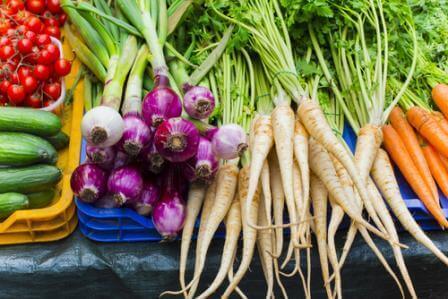
8 Secret Tips for Buying the Best Produce at the Supermarket

Go seasonal

You’ve probably heard that food tastes best when it’s in season, but did you know that it’s also cheapest then, too? That’s because when a farm near you is harvesting it, the price doesn’t include the transportation from another country. When a harvest has been particularly good, expect deep discounts as distributors try to get rid of a product before it goes bad.

Visit EatTheSeasons.com to find out what produce is in season in the US and Canada.

Weigh  in

If you’re buying produce that is priced by the item rather than by the pound (such as a head of lettuce, lemons, or avocados), take advantage of the store’s scales and weigh them to find the heaviest one. This way, you’ll be sure you’re getting the most for your money. The same is true for pre-packaged bags of produce: weigh bags of carrots, apples, and potatoes to see which is the best value for your money—we’ve found a wide range of weights even though the package specifies one particular weight.

Don’t dig for corn

When corn is piled high in supermarket bins, go for the ears that are on top. Why? Corn gets rapidly less sweet the warmer it gets, and even the heat generated by all the corn on the top of the pile can make the corn on the bottom start to lose its deliciously sweet taste.

Avoid puffy bags of lettuce

Buying a bag of pre-washed lettuce? Opt for the thinnest, most deflated bag you can find. Lettuce gives off gas as it ripens, and a puffy bag means it’s been sitting on the shelf for longer, and will go bad faster.

Look for pale patches

You might be inclined to avoid watermelon and other produce that has a giant pale patch on one side, opting instead for the “prettier” produce. But the truth is, a pale patch on one side of produce is a good sign: It means it was laying in a field when it ripened. Pick these fruits and veggies and you’ll get sweeter, riper produce.

Avoid white-topped strawberries

Conversely, when shopping for strawberries, you should avoid ones that have white tops near where they were picked. For strawberries, this is a sign that they were picked before they were ripened, and unlike other fruit they won’t ripen off the vine.

Go small for citrus

When selecting limes or lemons at the market, go for the biggest you can find. They tend to be sweeter than their smaller counterparts.

Don’t buy frosted vegetables

When shopping in the freezer aisle, avoid packages of frozen vegetables that have frost on them. It’s a sign that the food has thawed and refrozen, and a percentage of moisture has already been lost.

You should also...

Keep reading on Quick and Dirty Tips

Money Talk: Sara Fujimura on the Importance of Talking About Money

Money Girl Laura Adams: When did you decide that you wanted to become an author (or other career)?

Sara Fujimura: Not until after college where I earned a B.S. in Public Health Education. My favorite class in college was Epidemiology, and deadly diseases used to be my jam…that is until March 2020. I am infinitely fascinated by the Spanish Flu and did several articles about it, including one for Perspectives in Health, published by an arm of the World Health Organization. While doing research, I came across all kinds of captivating stories in diaries, letters, newspaper articles, and even some video interviews (much later on) from survivors. I took these true stories and wove them into my young adult historical fiction novel Breathe, which came out in 2018 on the 100th anniversary of the pandemic. Who knew that only two years later, everybody would suddenly become an expert on the Spanish Flu and pandemics in general? While I was doing research (so much research!) for Breathe, I decided to keep going with my storytelling, slowly moving from magazine articles to young adult books full-time.  

MG: Do you write full-time?

SF: I do, but I am also blessed to have a spouse with a stable job and health insurance. I didn’t start writing full-time until after my children finished high school. Before then, I wrote part-time and donated a lot of time to my children’s schools/activities. I don’t regret this at all. It was a time of story-collecting and educating myself on writing craft.

Writing tends to be a feast-or-famine occupation, and the pandemic hit our profession just as hard as everybody else’s. COVID19 has been the great equalizer. Whether you were the Big Fish or the tiny minnow in your publishing house, NOBODY went out on book tour. This is where being an indie-pubbed author first saved my bacon. Tor Teen (publisher for my third and fourth books) can definitely do things that I can’t, like getting my book reviewed on NPR. But I can also do things that they can’t, like tapping into my local networks and keeping my books alive even when all of my in-person events went *poof* in 2020. Yeah, releasing a new book two weeks before the country goes into lockdown…1 out of 10 stars. Highly would NOT recommend it. With America slowly opening back up, I hope to combine my entrepreneurial spirit with Tor Teen’s fantastic marketing team to make an exponential jump in sales with my latest book, Faking Reality (July 13).   

MG: Did you study writing (or something else) or has it always come naturally to you?

SF: People are often surprised to hear that I do NOT...

Keep reading on Quick and Dirty Tips

Rabu, 14 Juli 2021

The Colonel Who Went to War

There have been many neglected heroes and heroines from history, but few are as colorful, dynamic, and outlandish as Col. Frank “Howlin’ Mad” Howley. He was the man destined to run the American sector of four-power Berlin after the Second World War; he was also a man destined to launch a ferocious, one-man war against Stalin and the Soviet Union. To the Soviets, it was Howley, and Howley alone, who fired the starting gun for the Cold War…

Col Howley was a living legend to the men serving under him, a blunt-spoken Yankee with a dangerous smile and a disarmingly sharp brain. He commanded an outfit named “A1A1,” splendid shorthand for a group led by such a high-spirited adventurer. The task of this unit was to sweep into newly liberated territories and impose order on chaos, repairing shattered infrastructure and feeding starving civilians.

Howley may have played the cowboy, but he cared deeply about people’s welfare.

Colonel Howley had won his spurs in the chaotic aftermath of the D-day landings of June 1944. Appointed to run the wrecked port of Cherbourg, he swung into town like a benevolent dictator, abolishing the kangaroo courts that were dealing out rough justice to collaborators and ruling over his new fiefdom with a rod of iron. His second big job had been to organize the feeding of five million hungry Parisians after the city’s liberation in August 1944. He knew how to get things done: no bureaucracy, no red tape, no rules—unless they were his own. His success earned him plaudits from far and wide, not to mention the Legion of Merit, Croix de Guerre, and Légion d’honneur. Howley may have played the cowboy, but he cared deeply about people’s welfare.

His team was still running food supplies into the French capital in the autumn of 1944 when he was paid a visit by the American commander Brig-Gen. Julius Holmes at his offices at 7 Place Vendôme in Paris. Their conversation was perfunctory but purposeful.

“Frank,” Holmes asked, “how would you like to go to Berlin?” “Fine,” Howley said. “The job is done here[,] and I’d like to stay on the main line east. Berlin sounds good to me.”1 This brief exchange was all it took for him to land one of the biggest jobs in the postwar world. He certainly had the required levels of dynamism. He was a curious mixture of firebrand and intellectual, a man always on the alert like “a very large, trim eagle, ready to swoop if necessary.” In the years before the war, he had excelled as an All-American football player (he was known as “Golden Toe”). His sporting prowess had come to an untimely end when he crashed his motorcycle at reckless speed and broke his back and pelvis. He was...

Keep reading on Quick and Dirty Tips